
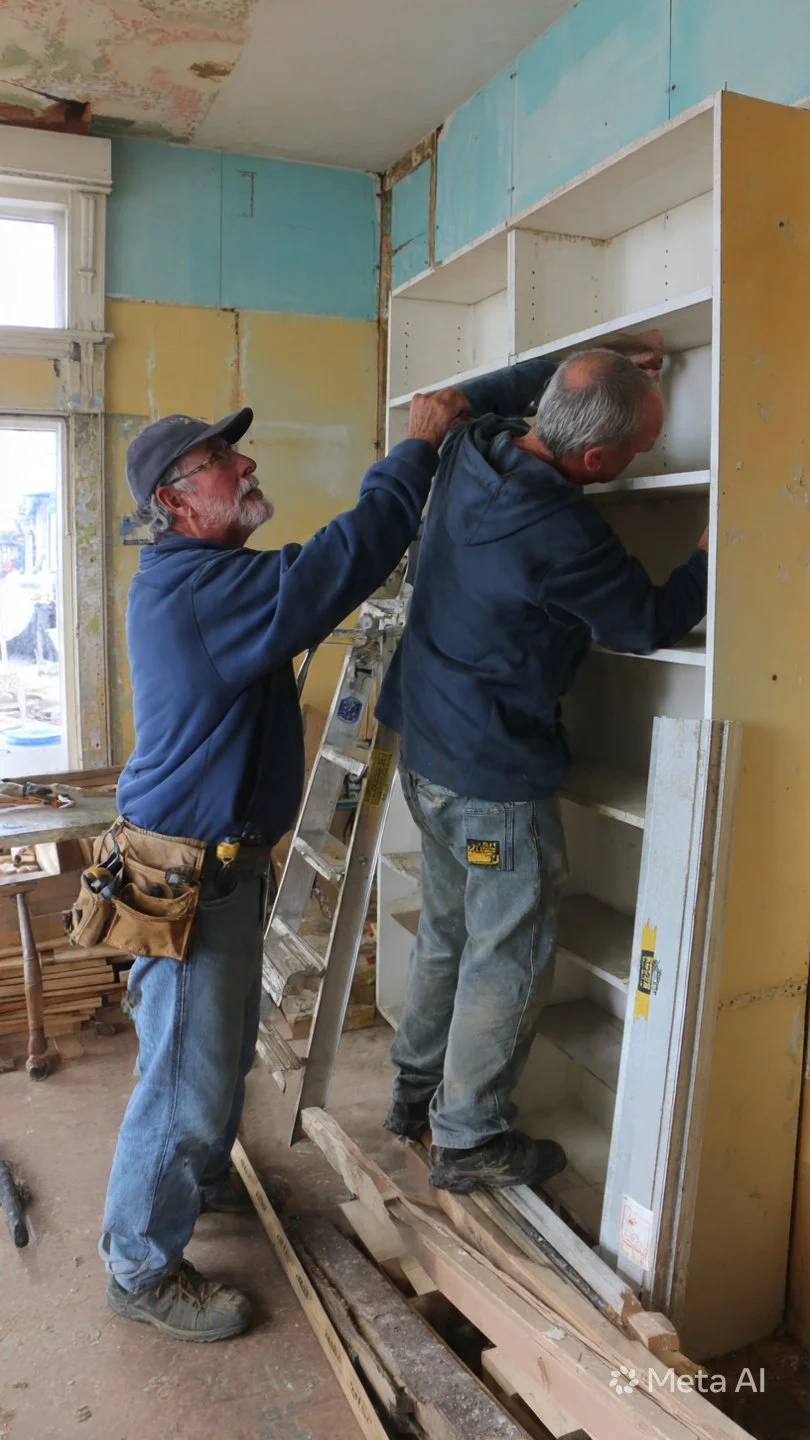
Shelving Installation
A shelf that's pulling away from the wall, sagging under weight, or has already come down isn't a job to leave for "later." A collapsed shelf can damage floors, break belongings, or injure someone — especially if it's loaded with books, kitchenware, or anything heavy. If your shelving feels loose, wobbly, or has failed outright, YWS can get a qualified installer to you fast to make it safe and properly secured.
Common Shelving Problems Customers Face
Shelves pulling out of the wall — screws or wall plugs failing under weight
Sagging or bowing shelves — wrong bracket spacing or unsuitable material for the load
Shelving fitted into plasterboard without proper fixings — a common cause of sudden failure
Uneven or crooked shelves — poor levelling during original installation
Shelves near sockets or wiring — drilling risk where cables run behind the wall
Heavy units (bookcases, garage shelving, floating shelves) not fixed to wall studs
Old or rusted brackets that need replacing before they fail completely
How YWS Helps
YWS arranges the right tradesperson for the job — someone experienced in reading wall types (masonry, plasterboard, stud), selecting the correct fixings, and calculating safe load limits before anything goes up. Rather than a generic "hang and hope" job, YWS matches you with an installer who assesses the wall, the intended load, and any nearby hazards first, then fits shelving that's secured properly and built to stay that way.
Safety First — Especially Around Electrics
Do not attempt to drill into walls yourself if you are unsure what is behind them. Walls can conceal electrical cables, water pipes, or gas lines, and drilling into these can cause serious injury, electric shock, or a fire risk. This is exactly why YWS only arranges installers who use proper cable/pipe detection equipment before drilling.
If you notice any of the following, stop and do not attempt a DIY fix:
Exposed wiring near or behind existing shelving
Sockets or switches close to the shelf area
Any scorch marks, buzzing, or warm sockets near the installation site
Electrical safety is not an area for guesswork — always let a qualified professional handle drilling near wiring.
Request an Enquiry Today
Don't wait for a shelf to fail. [Submit an Emergency Enquiry] and YWS will arrange a qualified installer to assess and fix your shelving quickly and safely.
[Book Shelving Installation Now →]
Frequently Asked Questions
1. Is it dangerous if my shelf is already sagging or pulling away from the wall? Yes. A sagging or loosening shelf can fail without warning, especially under weight. Remove heavy items immediately and arrange an inspection as soon as possible.
2. Can I fix a loose shelf myself? We don't recommend it if you're unsure of the wall type or what's behind it. Incorrect fixings or drilling into hidden cables/pipes can cause serious harm. It's safer to have a professional assess it.
3. How do I know if there's wiring behind my wall? You often can't tell without proper detection equipment. Never assume a wall is safe to drill — this is a key reason to use a qualified installer.
4. How quickly can YWS arrange someone to help? YWS prioritises urgent shelving issues and works to arrange a suitable installer as quickly as possible, often the same day depending on availability.
5. What types of shelving can be installed or repaired? Floating shelves, bracket shelving, garage/utility shelving, bookcases, and fitted alcove units — all matched to the correct fixings for your wall type and load.
6. What if my shelving has already collapsed and caused damage? Clear the area for safety, avoid walking on broken debris, and submit an enquiry so YWS can arrange an assessment and safe reinstallation.