
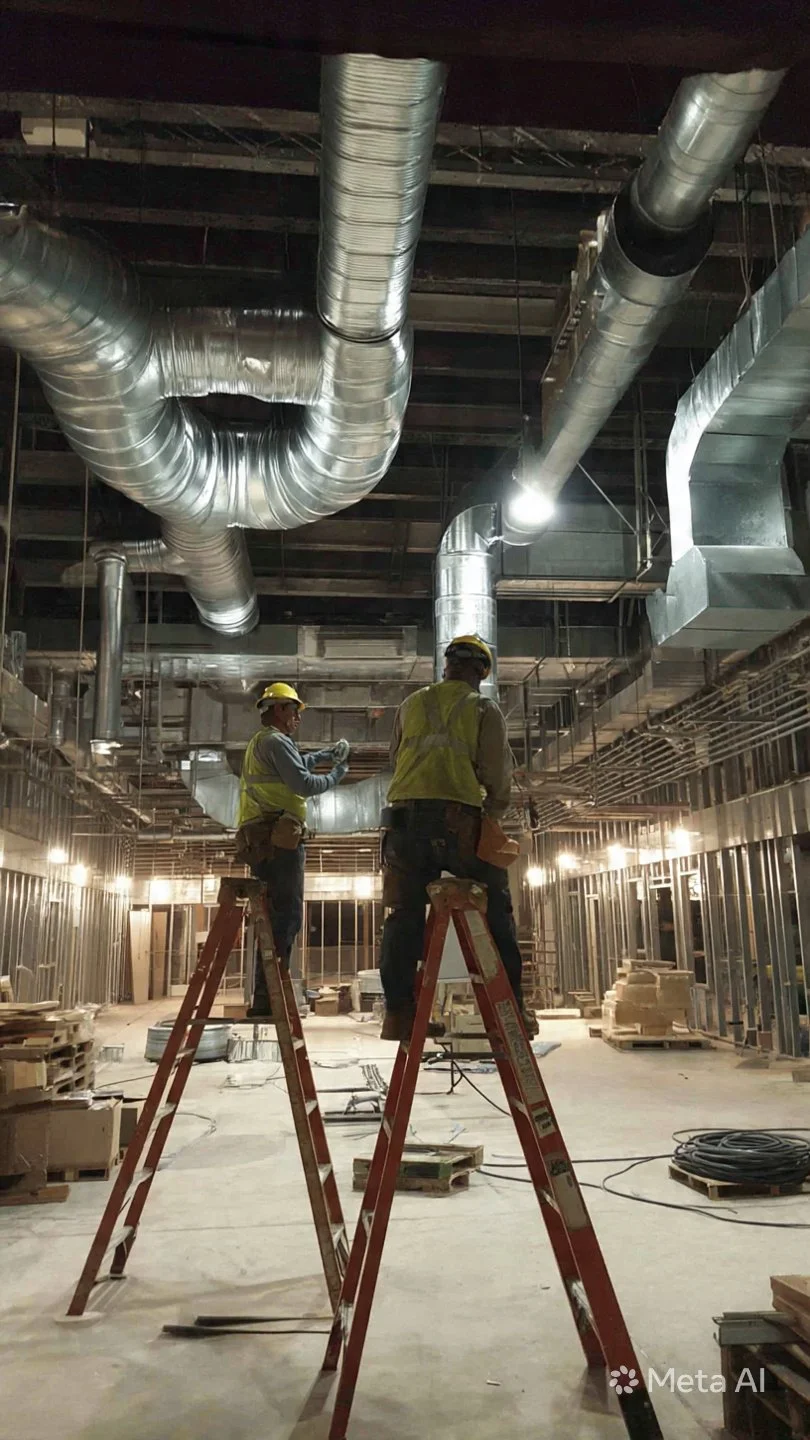
Ductwork Installation & Repair
Faulty ductwork isn't just an inconvenience — it can mean poor air quality, spiralling energy bills, unsafe electrical connections near damaged units, or a heating and cooling system that stops working altogether. If you've noticed rattling, whistling, reduced airflow, damp patches, unusual smells, or a complete loss of heating or cooling, the problem needs attention now, not next month. Left unresolved, damaged ductwork can worsen quickly and, in some cases, create genuine safety risks. Do not attempt to inspect, repair, or work near ductwork connected to electrical components yourself — get qualified support arranged today.
Common Ductwork Problems Customers Face
Leaking or disconnected ducts — causing draughts, energy loss, and uneven heating or cooling across rooms
Blocked or crushed ductwork — restricting airflow and putting strain on the connected heating/cooling system
Rattling, banging, or whistling noises — often a sign of loose fittings, damage, or pressure imbalance
Mould, damp, or musty smells — indicating condensation build-up or water ingress inside the duct system
Old, corroded, or damaged ducting — increasing the risk of leaks, poor efficiency, and potential hazards
New installation needs — for extensions, renovations, or replacing outdated systems that no longer meet current standards
Electrical faults near duct units — exposed wiring, damaged connections, or fan/motor issues that require a qualified electrician
A Note on Safety
Ductwork systems are frequently tied into electrical components — fans, motors, thermostats, and control units. Never attempt to open, repair, or investigate ductwork that is near or connected to electrical wiring or components. Faulty electrics combined with damaged ducting can present a serious risk of electric shock or fire. Always switch off the system at the isolator if it is safe and accessible to do so, and avoid touching any visibly damaged wiring, scorch marks, or exposed components. Leave all diagnosis and repair work to a qualified professional.
Frequently Asked Questions
1. My ductwork is making a loud rattling noise — is this an emergency?
It can be. Unusual noises often signal loose or failing components. Stop using the system if possible and arrange an assessment promptly to avoid further damage.
2. There's a burning smell near my duct unit — what should I do?
Switch off the system at the isolator if safe to do so, do not investigate further, and treat this as urgent. Contact us immediately to arrange emergency support.
3. Can I patch or seal a leaking duct myself?
We strongly advise against DIY repairs, particularly where ductwork is near electrical components. Incorrect sealing can also mask a bigger underlying issue.
4. How quickly can support be arranged?
We prioritise urgent enquiries and work to connect you with a suitable engineer as fast as possible. Contact us and flag if the issue is urgent.
5. Do I need a full replacement or just a repair?
This depends on the age, condition, and extent of the damage. A qualified engineer will assess this properly rather than guessing over the phone.
6. Is it safe to keep using my heating/cooling system while I wait for support?
If you've noticed damage, unusual smells, or electrical warning signs, it's safest to turn the system off until it has been assessed.
Don't Wait for the Problem to Get Worse
Ductwork issues rarely fix themselves — and where electrics are involved, delays can be dangerous. Get the right support arranged today.
[Enquire Now for Emergency Ductwork Support →] [Request a Callback →]
YWS connects customers with qualified engineers for ductwork installation, repair, and urgent safety callouts.